
Castiron is built to help independent food artisans start, build, and grow their businesses online.
Sign Up (It's Free!)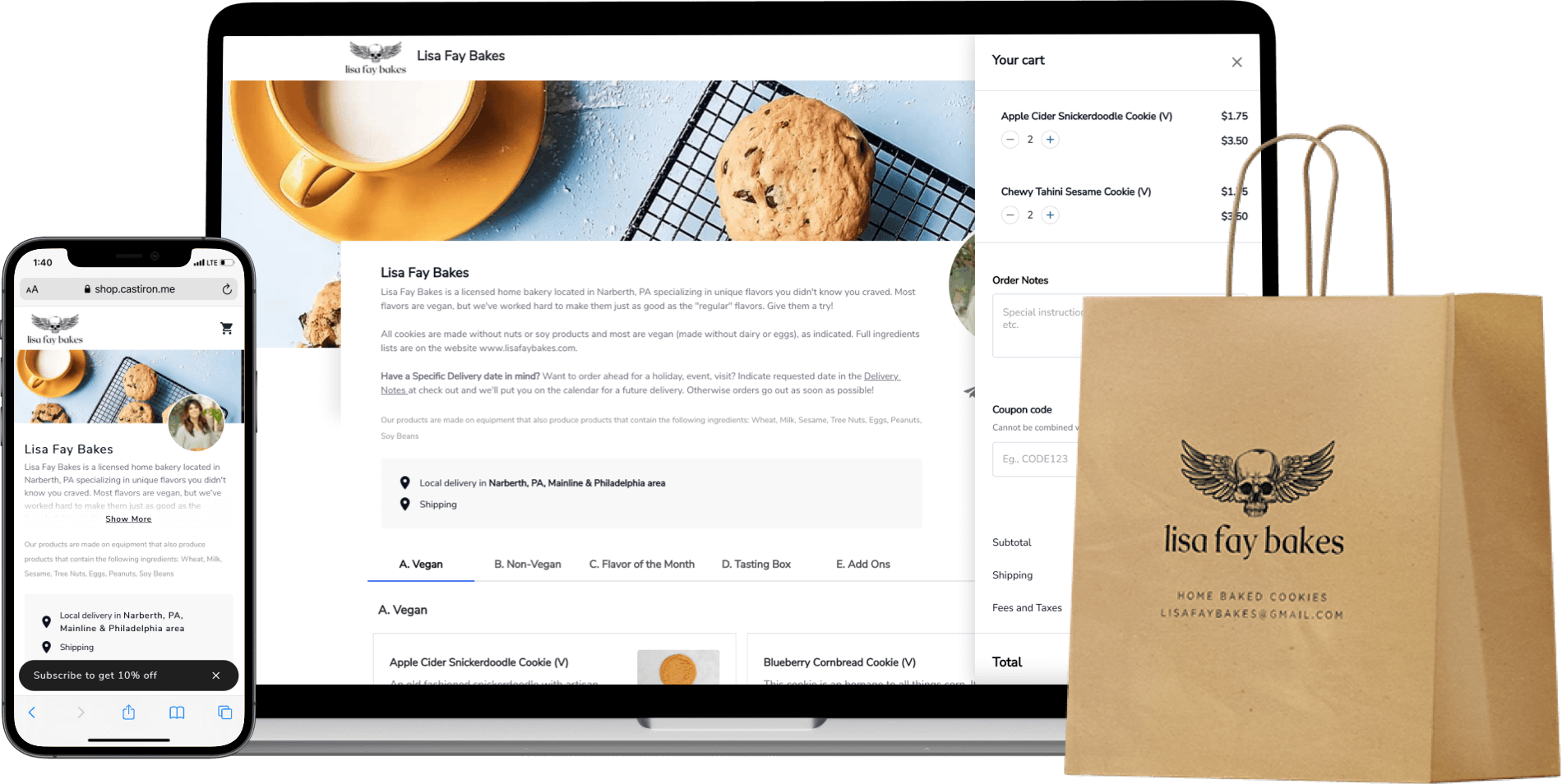
In 2022, for the first time ever, the answer to "Can I sell food from home?" is "Yes!" The last state that prohibited selling homemade food changed its laws in October of 2021 and now issues a permit to sell food from home. There is now a home-based food business for everyone!
But you still need to know the rules on selling food from home. In some states you need to know how to get a license to sell food, or you will need to file a cottage food application. There are also rules about selling food online in general and selling homemade food online in particular.
Here are the essential facts.
It is a lot easier to get started selling homemade food from home than it is to start a small cafe, a coffee shop, or a food truck. You already have a kitchen. You already know where to find your ingredients. You don't have to rent or buy a new place of business or hire servers, kitchen staff, and cleaners.
You can scale your home food business to fit the amount of time you have to devote to it and the amount of money you have to invest. You can sell your homemade food products at farmers' markets or directly from your home. You can sell food one day a month, one day a week, or, if you decide to hire staff, 24/7/365. But you will run up against income limits as your business grows.
The states impose income limits of $5,000 to $50,000 on home food producers. This is because the cottage food laws are written to give a break to small business people seeking to supplement their income. When you start to become the next Martha Stewart, or Famous Amos, or Mrs. Fields, you will need to make substantial investments in compliance with state food laws.
You will also need to follow a much more complicated set of rules if you want to sell across state lines, making your food products federally regulated.
Just about everyone sells to family and friends, but if you want to grow your business, you need to move beyond selling just to people you know.
One way to connect with new customers is through social media. Homemade food photos can always attract a following on Instagram. You can become famous fast with beautiful images of delicious food.
Cooking videos are always popular on YouTube. Your customers may see how hard it is to make your specialties and decide they will only buy them from you.
You can interact with future customers on a Facebook page. Your Facebook page is a place to announce where you will be selling your homemade food, to answer customer questions about your homemade food, and to discuss your homemade food with customers.
Just remember that your wonderful homemade food is magical for your best customers, and let them have a private experience of their orders. For instance, you should not post a photo of a customer's wedding cake before the big event.
There is one problem with social media that you won't have with a dedicated website: Trolls.
Not everybody is nice. Competitors may troll your social media pages. With a website for your homemade food business, you have all the advantages of an Internet presence without the necessity of constantly policing for trolls.
A well-designed website gives your customers pages they can visit again and again to place orders. They can link to your website and help you expand your customer base. Social media is great for helping your customers get to know you better, but a personal website is entirely under your control.
Find all of the tools you need to build your food business in one simple platform. If this isn’t the easiest store setup process you’ve seen, we’d offer to refund you, but it’s free!
Get StartedNo Credit Card Required